
MillGuard
Feed hygiene without compromise
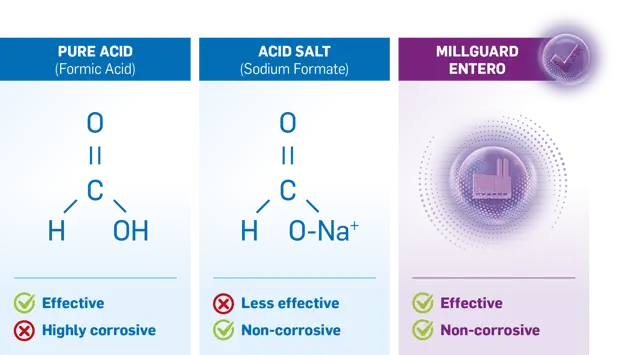
Organic acids help protect feed from enterobacteria such as Salmonella, during processing and in storage. Pure formic acid works well, but it is highly corrosive. Acid salts such as sodium formate are not corrosive, but they are less effective. MillGuard Entero gives you both: the antimicrobial strength of formic acid with the low corrosiveness of a salt. You get effective feed hygiene without risking your staff or your equipment.
MillGuard fits every production facility
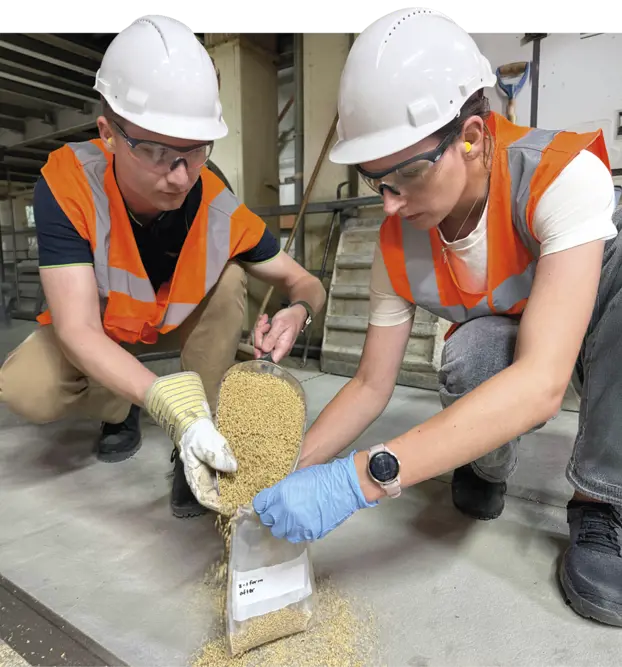
MillGuard Entero comes in two forms to suit your process. MillGuard Entero Liquid is supplied in IBCs that connect directly to the production line. MillGuard Entero Dry is a bagged product on a silica carrier, which makes it easy to dose.
In a pellet-line production and storage trial, MillGuard Entero showed it reduced entero bacterial count as well as a commonly used market benchmark even at lower dosage.
MillGuard Entero uses three key components that work together
- Formic acid has strong antimicrobial activity.
- Essential oils help to break down bacterial cell membranes.
- Lignosulphonic acid forms a protective layer on contact surfaces, reducing corrosion and irritation.
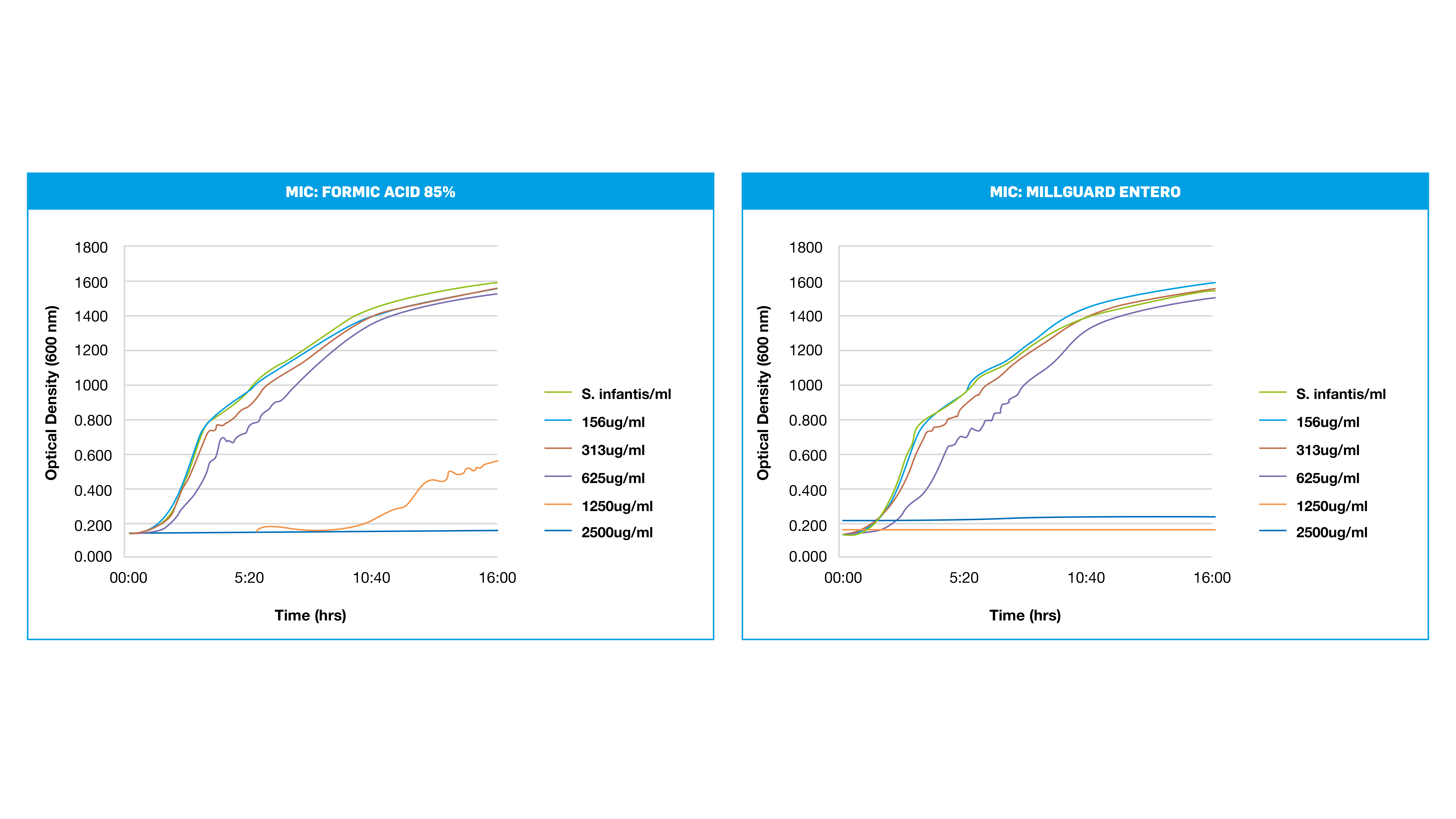
Minimum Inhibitory Concentration (MIC) tests on Salmonella Infantis confirm MillGuard Entero to be at least as effective as 85% formic acid, which shows the extra strength that comes from combining organic acids with essential oils. Also the effect on animal performance was tested. A broiler study showed no negative effect on feed intake or performance, even at doses up to 12 kg/MT of complete feed.
Protects your equipment, safer to handle
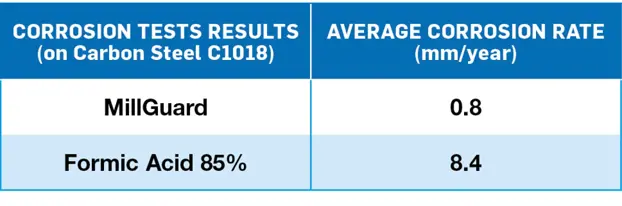
Lignosulphonic acid makes a clear difference to corrosion. On carbon steel C1018, MillGuard Entero corrodes more than ten times more slowly than 85% formic acid.
Although MillGuard Entero has a low pH, it is safe to use and not corrosive. That makes it safer for operating staff and gentler on plant equipment.